Methodology

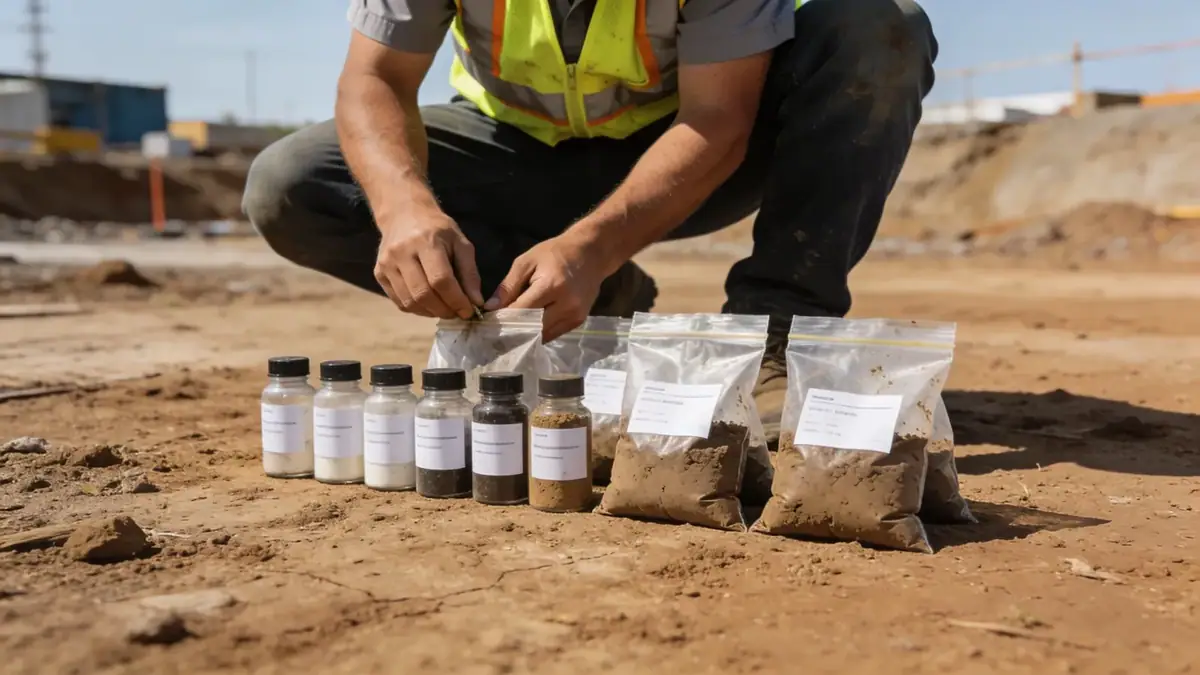
Our methodology in Bakersfield begins with a thorough site reconnaissance and review of existing geological maps. For subsurface investigation, we typically employ spt boring in accordance with ASTM D1586, advancing borings to depths of 10 to 30 meters depending on structural loads. Soil samples are retrieved at 1.5-meter intervals and logged in the field. We then conduct laboratory testing on representative samples, including grain-size analysis, Atterberg limits, and direct shear tests, to characterize strength and compressibility. This data informs our engineering analyses for foundations, slope stability, and seismic design, always tailored to Bakersfield's specific soil profiles and regulatory framework.
Reference Technical Parameters
| Parameter | Reference Value |
|---|---|
| Predominant soil type | Alluvial sands, silts, and clays |
| Maximum seismic acceleration (PGA) | 0.4g (ASCE 7-16, Site Class D) |
| Typical groundwater level | 6 to 15 meters below ground surface |
| Bedrock depth | Greater than 30 meters (deep alluvium) |
| Typical N60 range (SPT) | 10 to 50 blows per 0.3m |
Local Considerations — Bakersfield
Bakersfield's geology is dominated by deep alluvial deposits from the Kern River fan, with interbedded sands, silts, and clays. The water table is generally deep, but seasonal fluctuations occur near the river. Seismic hazards include strong ground shaking from nearby faults (e.g., White Wolf, San Andreas) and potential liquefaction in loose saturated sands. Our team addresses these challenges by integrating site-specific seismic response analyses and recommending appropriate foundation systems. For projects requiring advanced characterization, we coordinate with our soil mechanics laboratory to perform cyclic triaxial tests and resonant column tests. The local building code enforces the California Building Code with seismic provisions from ASCE 7, making our expertise in Bakersfield indispensable for safe and economical designs.
Request a Quote
Our team reviews your project and issues an initial report at no cost.
Or write us directly at [email protected]
Services in Bakersfield
Applicable Standards
- ASTM D1586 (Standard Test Method for SPT)
- ASCE 7-16 (Minimum Design Loads and Associated Criteria for Buildings)
- California Building Code (CBC) 2022
- ASTM D2487 (Classification of Soils for Engineering Purposes)
Frequently Asked Questions
What types of soil are commonly found in Bakersfield?
Bakersfield's soils are primarily alluvial deposits from the Kern River, consisting of sands, silts, and clays in varying proportions. The western areas often have more clay-rich soils, while the east tends toward sandier profiles. These variations require careful site-specific investigation.
Is a geotechnical study mandatory for construction in Bakersfield?
Yes, the California Building Code requires a geotechnical investigation for most new structures, particularly in Seismic Design Categories D and above. Local jurisdictions in Kern County also mandate reports for subdivisions, retaining walls, and slope modifications to ensure public safety.
How does seismic activity affect foundation design in Bakersfield?
Bakersfield lies in a high seismic zone with peak ground accelerations up to 0.4g. Foundation design must consider liquefaction potential in loose sands, lateral spreading near the Kern River, and fault rupture hazards. Deep foundations or ground improvement are often recommended to mitigate risks.