
Methodology
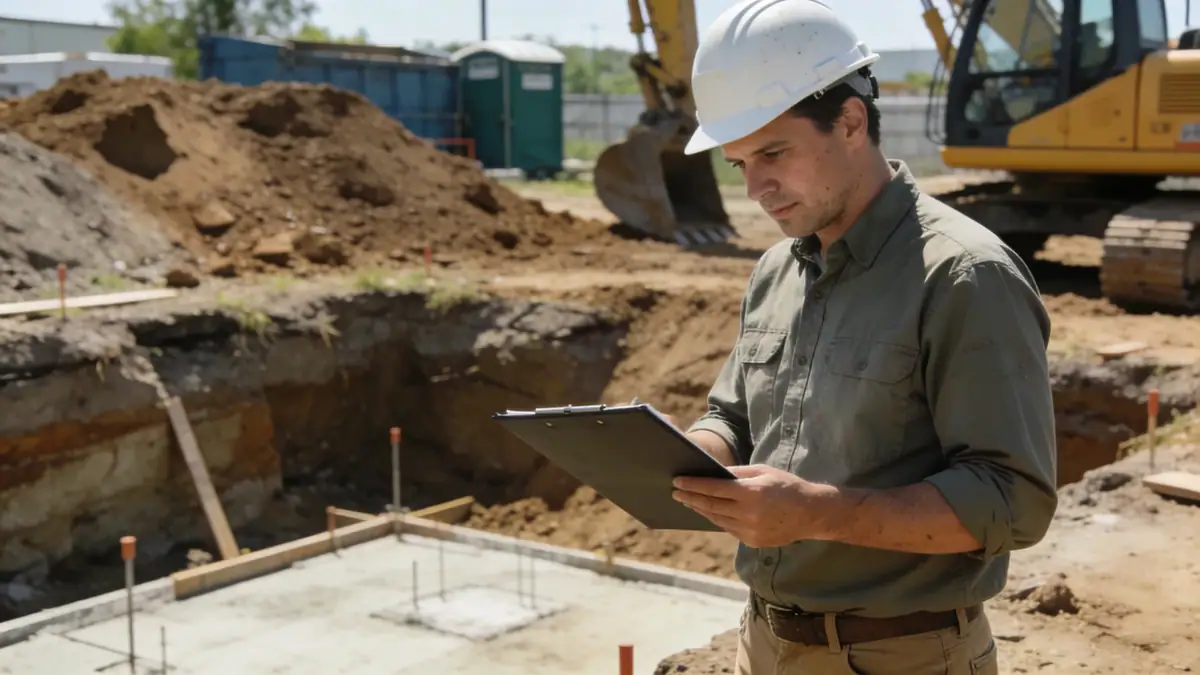
Our approach to geotechnical engineering in Atlanta integrates standard penetration testing (SPT) per ASTM D1586 with continuous sampling and laboratory classification to characterize the complex residual soil profile. We employ spt boring at spacings of 30 to 60 m for large developments, with blow counts (N60) typically ranging from 4 to 50 in the upper weathered zone. Field investigations are complemented by laboratory index tests, including Atterberg limits and grain-size analysis, to evaluate shrink-swell potential and collapse susceptibility. Our methodology ensures that foundation designs for Atlanta's rolling topography account for variable bearing strata and groundwater conditions.
Reference Technical Parameters
| Parameter | Reference Value |
|---|---|
| Predominant soil type | Micaceous silty sand (SM) to sandy silt (ML) with saprolite |
| Maximum seismic acceleration (PGA) | 0.15–0.25g (ASCE 7-16, 0.2s period) |
| Typical groundwater level | 5–15 m below grade; perched zones common |
| Bedrock depth | 5–30 m; varies with Piedmont topography |
| Typical N60 range (SPT) | 4–50 blows/300 mm in weathered zone |
Local Considerations — Atlanta
Atlanta's Piedmont geology requires careful assessment of residual soil thickness and saprolite weathering profiles, which can change abruptly over short distances. Our work in Buckhead and Midtown often encounters deep weathering (10–20 m), while areas near the Chattahoochee River feature alluvial deposits with shallow groundwater. Seismic site class D or C (ASCE 7) is typical, necessitating site-specific response analysis for essential facilities. For slope stability assessments, we evaluate cut slopes in residential subdivisions where failure surfaces often follow relict joint planes. Land development in northern suburbs frequently requires retaining wall design for grade changes exceeding 3 m.
Request a Quote
Our team reviews your project and issues an initial report at no cost.
Or write us directly at [email protected]
Services in Atlanta
Locations covered in Atlanta
Applicable Standards
- ASTM D1586 – Standard Test Method for Standard Penetration Test (SPT)
- ASCE 7-16 – Minimum Design Loads for Buildings and Other Structures (Seismic)
- International Building Code (IBC) 2021 – Seismic Design Category C
- ASTM D2487 – Standard Practice for Classification of Soils for Engineering Purposes (Unified Soil Classification System)
Frequently Asked Questions
What are the typical soil conditions encountered in Atlanta for geotechnical projects?
Atlanta's soils are predominantly residual, formed from in-place weathering of crystalline metamorphic and igneous rocks. These include micaceous silty sands (SM), sandy silts (ML), and clayey sands (SC) with saprolite. Bearing capacities for shallow foundations typically range from 150 to 300 kPa in competent weathered rock, but may be lower in highly decomposed zones.
How does seismic design affect geotechnical engineering in Atlanta?
Atlanta is in Seismic Design Category C (IBC) with mapped spectral accelerations S_S up to 0.25g and S_1 up to 0.10g. Site-specific response analysis is required for essential facilities. Liquefaction potential is low due to deep groundwater, but cyclic softening in sensitive clays may be considered.
Are geotechnical investigations mandatory for construction projects in Atlanta?
Local building codes generally require a geotechnical investigation for new structures, particularly for buildings with more than three stories or those in Seismic Design Category C. The investigation must characterize soil profiles, groundwater, and provide recommendations for foundation design and earthwork.