Methodology

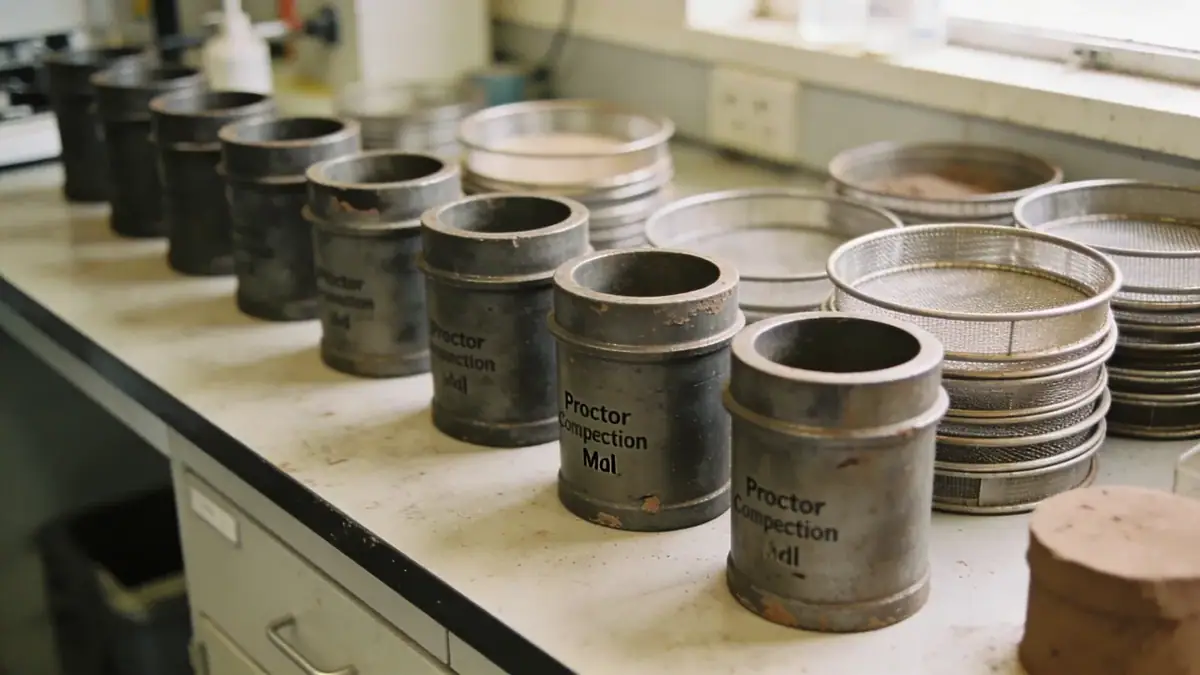
Our approach to geotechnical engineering in Winston Salem begins with a thorough review of existing geological maps and historical data for the Piedmont region. We conduct subsurface investigations using standard penetration testing (SPT) per ASTM D1586, with sampling intervals typically at 1.5 m to capture soil variability. In our soil mechanics laboratory, we perform index tests, including Atterberg limits and grain size analysis, to classify soils and assess their engineering properties. For seismic evaluations, we measure shear wave velocity using MASW or downhole methods to determine site class per ASCE 7-22. All data are synthesized to provide actionable recommendations for foundation design, earthworks, and slope stability.
Reference Technical Parameters
| Parameter | Reference Value |
|---|---|
| Predominant Soil Type | Residual silty sands and clays (Piedmont saprolite) |
| Maximum Seismic Acceleration (PGA, 2% in 50 years) | 0.15 to 0.25 g (per USGS Seismic Hazard Maps) |
| Typical Groundwater Level | 3 to 8 m below ground surface, variable with season |
| Bedrock Depth | 5 to 30 m, highly variable; shallow in western areas |
| Typical N60 Range (SPT) | 10 to 30 blows/0.3 m in residual soils; >50 in weathered rock |
Local Considerations — Winston Salem
Winston Salem lies within the Piedmont physiographic province, characterized by residual soils derived from granite, gneiss, and schist. These soils often exhibit high plasticity and shrink-swell potential, requiring careful evaluation for foundation design. Groundwater levels fluctuate significantly with rainfall, impacting excavation dewatering and slope stability. Seismic hazard is moderate, with peak ground accelerations up to 0.25 g, necessitating site-specific response analyses for critical structures. Western areas near the Brushy Mountains have shallower bedrock, while eastern districts feature deeper saprolite. Typical projects include residential subdivisions, commercial buildings, and roadways, each requiring tailored subsurface programs. For broader context, our geotechnical engineering en Atlanta team addresses similar Piedmont conditions across the region.
Request a Quote
Our team reviews your project and issues an initial report at no cost.
Or write us directly at [email protected]
Services in Winston Salem
Applicable Standards
- ASTM D1586 (Standard Penetration Test)
- ASCE 7-22 (Minimum Design Loads for Buildings and Other Structures)
- IBC 2021 (International Building Code)
- North Carolina Building Code (NCBC)
- ASTM D2487 (Unified Soil Classification System)
Frequently Asked Questions
What are the typical soil conditions in Winston Salem for foundation design?
Winston Salem's Piedmont soils are predominantly residual silty sands and clays over weathered rock. These soils often have moderate bearing capacity but can be variable, with pockets of high plasticity clay. Deep foundations may be needed where competent rock is deep. Site-specific SPT borings and laboratory testing are essential.
Is seismic design required for structures in Winston Salem?
Yes, the 2021 IBC and North Carolina Building Code require seismic design for most structures. Winston Salem falls in Seismic Design Category B, with PGA values up to 0.25 g. Site class determination via shear wave velocity testing is necessary to apply ASCE 7-22 response spectra.
Are geotechnical investigations mandatory for new construction in Winston Salem?
While not always legally mandated for small residential projects, geotechnical investigations are strongly recommended and often required by local building officials for commercial or multi-story structures. They help mitigate risks from variable soil conditions and seismic hazards, ensuring safe and cost-effective foundations.