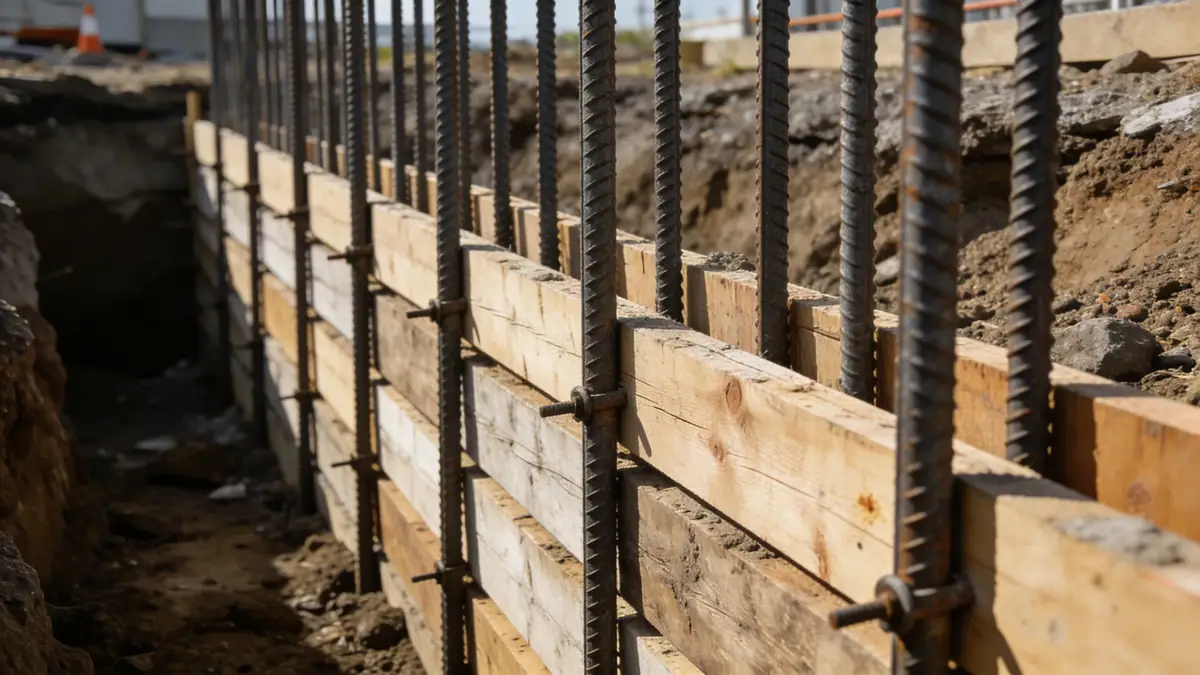
Methodology
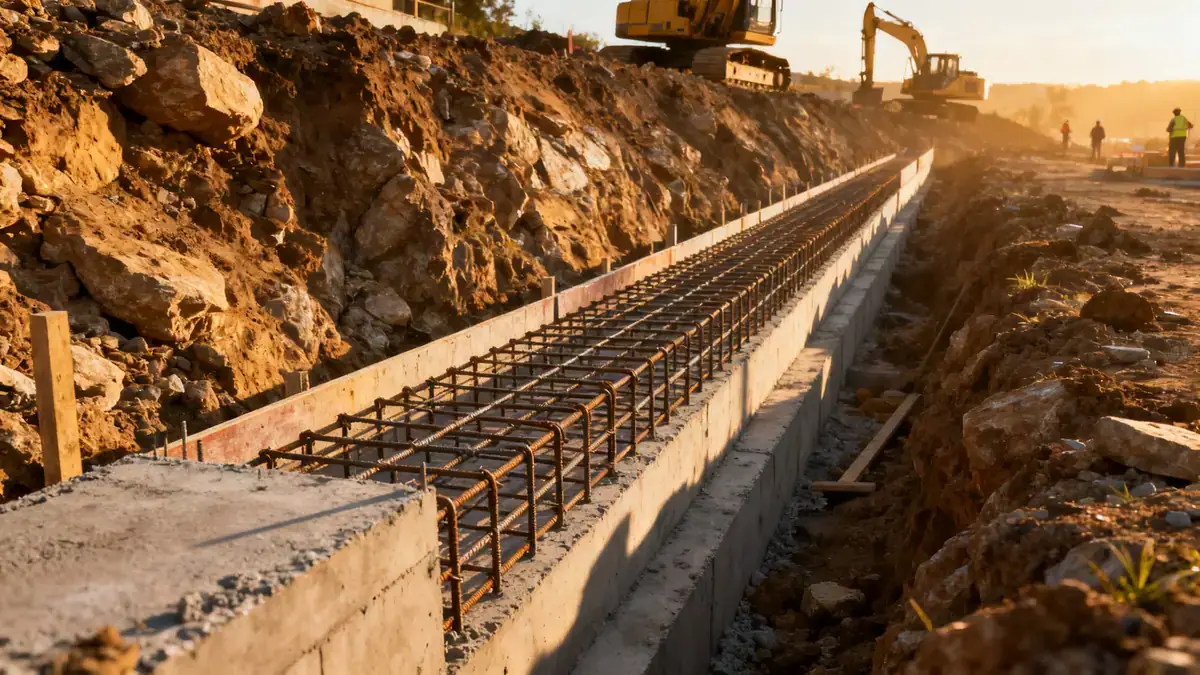
Our methodology begins with a subsurface investigation using standard penetration testing (SPT) per ASTM D1586 to characterize soil stratigraphy and strength parameters. We then perform limit equilibrium and finite element analyses to compute lateral earth pressures, considering active, passive, and at-rest conditions. For a typical 20-foot excavation, we design reinforced concrete or mechanically stabilized earth (MSE) walls, verifying global stability, overturning, sliding, and bearing capacity. We also incorporate seismic coefficients per ASCE 7-22. For detailed subsurface data, we rely on SPT Boring and Soil Mechanics Laboratory services.
Reference Technical Parameters
| Parameter | Reference Value |
|---|---|
| Maximum Wall Height | Up to 40 ft (12 m) |
| Design Lateral Pressure | 30–60 psf per foot of depth |
| Factor of Safety (Overturning) | ≥ 2.0 |
| Factor of Safety (Sliding) | ≥ 1.5 |
| Seismic Coefficient (ASCE 7) | 0.05–0.40 g depending on site class |
Local Considerations — USA
Retaining wall design varies significantly across US regions due to diverse geologic conditions. In coastal cities like Miami and Houston, high groundwater and soft clays require drainage systems and deeper embedment. In seismic zones such as Los Angeles and San Francisco, dynamic earth pressures and liquefaction potential govern design. In colder climates like Anchorage and Minneapolis, frost heave must be considered. Our team adapts every design to local codes and soil conditions, referencing site-specific borings and laboratory tests to ensure long-term performance in cities like Akron, Albuquerque, Allentown, Anaheim, Anchorage, and Arlington.
Request a Quote
Our team reviews your project and issues an initial report at no cost.
Or write us directly at [email protected]
Applicable Standards
- ASTM D1586 (Standard Penetration Test)
- ASCE 7-22 (Minimum Design Loads and Associated Criteria for Buildings)
- IBC 2021 (International Building Code)
- AASHTO LRFD Bridge Design Specifications (for MSE walls)
Frequently Asked Questions
What is the typical design process for a retaining wall?
Our process includes subsurface investigation, laboratory testing, and numerical modeling. We first conduct borings and SPT tests to determine soil stratigraphy and strength. Then we perform limit equilibrium analyses to compute lateral pressures and check stability. Finally, we prepare detailed construction drawings and specifications.
Which codes and standards govern retaining wall design in the US?
Retaining walls are designed per the International Building Code (IBC) and ASCE 7 for seismic loads. For reinforced concrete walls, we follow ACI 318. For MSE walls, AASHTO LRFD specifications apply. Local amendments may also be enforced.
How long does a retaining wall design project typically take?
Typical timelines range from 2 to 6 weeks depending on project complexity, site access, and required subsurface investigation. A simple cantilever wall with available soil data may take 2 weeks, while a complex MSE wall with seismic analysis may take 6 weeks.
How much does retaining wall design cost in the US?
Costs typically range from $1,050 to $4,200, depending on wall height, soil conditions, and number of design iterations. The estimate includes subsurface data review, analysis, and stamped drawings. For an accurate quote, please contact our team with project details.