Methodology

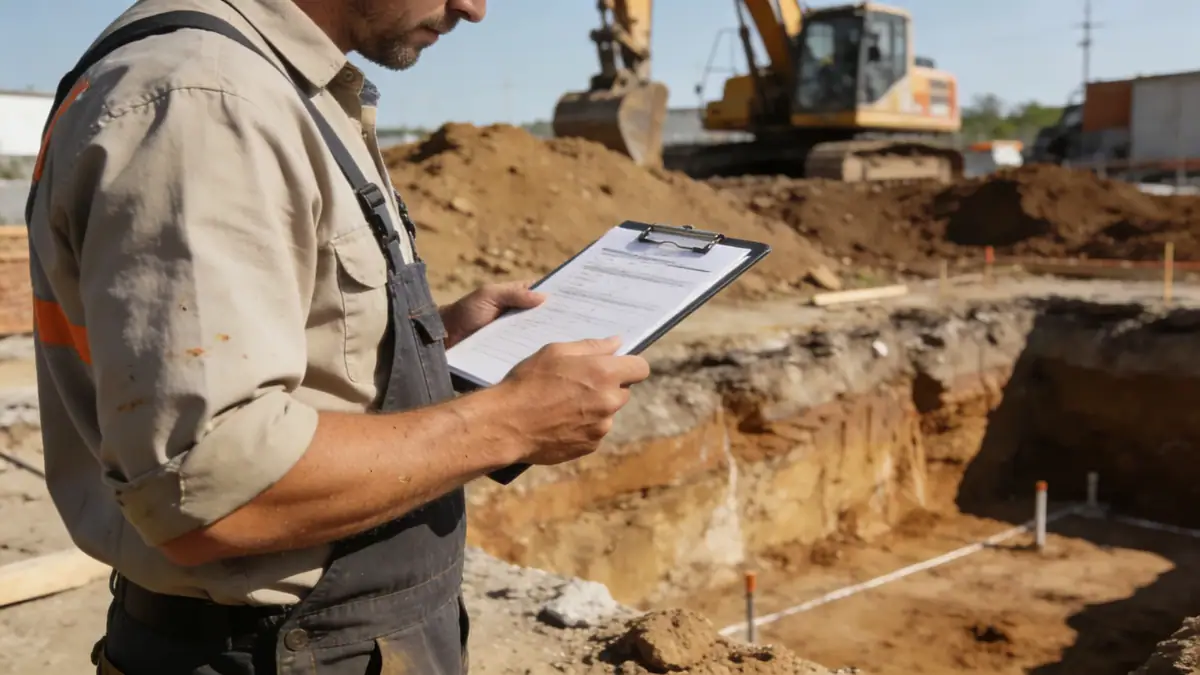
Our geotechnical investigations in Chattanooga follow a systematic approach aligned with ASTM standards. We begin with a thorough review of existing geological maps and subsurface data, then conduct field exploration programs including spt boring to obtain disturbed and undisturbed samples. Laboratory testing under ASTM D1586 and D2487 classifies soils and determines engineering properties. Seismic hazard assessments incorporate ASCE 7 site classification and ground motion parameters. Our methodology integrates field and lab data to develop geotechnical models that inform foundation design, slope stability, and earthwork recommendations.
Reference Technical Parameters
| Parameter | Reference Value |
|---|---|
| Predominant soil type | Residual silty sands and clayey gravels over weathered shale/limestone |
| Maximum seismic acceleration (PGA) | 0.15–0.20 g (ASCE 7-16, Site Class C) |
| Typical groundwater level | 5–15 feet below ground surface, seasonal variation |
| Bedrock depth | 10–30 feet (shale/limestone), variable |
| Typical N60 range (SPT) | 10–30 in residual soils; >50 in weathered rock |
Local Considerations — Chattanooga
Chattanooga's geology is dominated by the Ridge and Valley province, where alternating layers of limestone, shale, and sandstone create variable bearing conditions. 1. **Soil variability**: Residual soils over weathered bedrock require careful SPT sampling per ASTM D1586. 2. **Groundwater**: Shallow water tables in valley bottoms affect excavation and foundation design. 3. **Seismic considerations**: Moderate seismicity (PGA ~0.15g) per ASCE 7 requires site-specific response analysis. 4. **Karst potential**: Limestone dissolution can create voids; geophysical surveys are recommended. 5. **Urban fill**: Historic industrial areas may contain uncontrolled fill, necessitating advanced soil mechanics laboratory testing. Our team integrates these factors into practical recommendations for local projects. For regional context, our geotechnical engineering services in Atlanta address similar Piedmont geology.
Request a Quote
Our team reviews your project and issues an initial report at no cost.
Or write us directly at [email protected]
Services in Chattanooga
Applicable Standards
- ASTM D1586 (Standard Penetration Test)
- ASCE 7-16 (Minimum Design Loads for Buildings)
- IBC 2021 (International Building Code)
- Chattanooga City Code Chapter 26 (Grading and Excavation)
Frequently Asked Questions
What soil types are commonly encountered in Chattanooga?
Chattanooga soils are primarily residual, derived from weathering of sedimentary rocks. Common types include silty sands (SM), clayey sands (SC), and low-plasticity clays (CL) overlying weathered shale and limestone. In valley areas, alluvial deposits may contain soft clays and silts.
Is seismic design required for projects in Chattanooga?
Yes, Chattanooga is in Seismic Design Category B per IBC 2021, with a mapped PGA of 0.15–0.20 g. Site-specific seismic hazard analysis per ASCE 7 may be required for critical facilities or sites with soft soils. Our team evaluates site class and ground motion parameters for compliance.
Are geotechnical studies mandatory for construction in Chattanooga?
The Chattanooga City Code requires geotechnical investigations for grading permits, retaining walls over 4 feet, and structures on fill. Many commercial and multifamily projects require a geotechnical report to satisfy building permit requirements. Our firm provides reports that meet local and IBC standards.