
Methodology
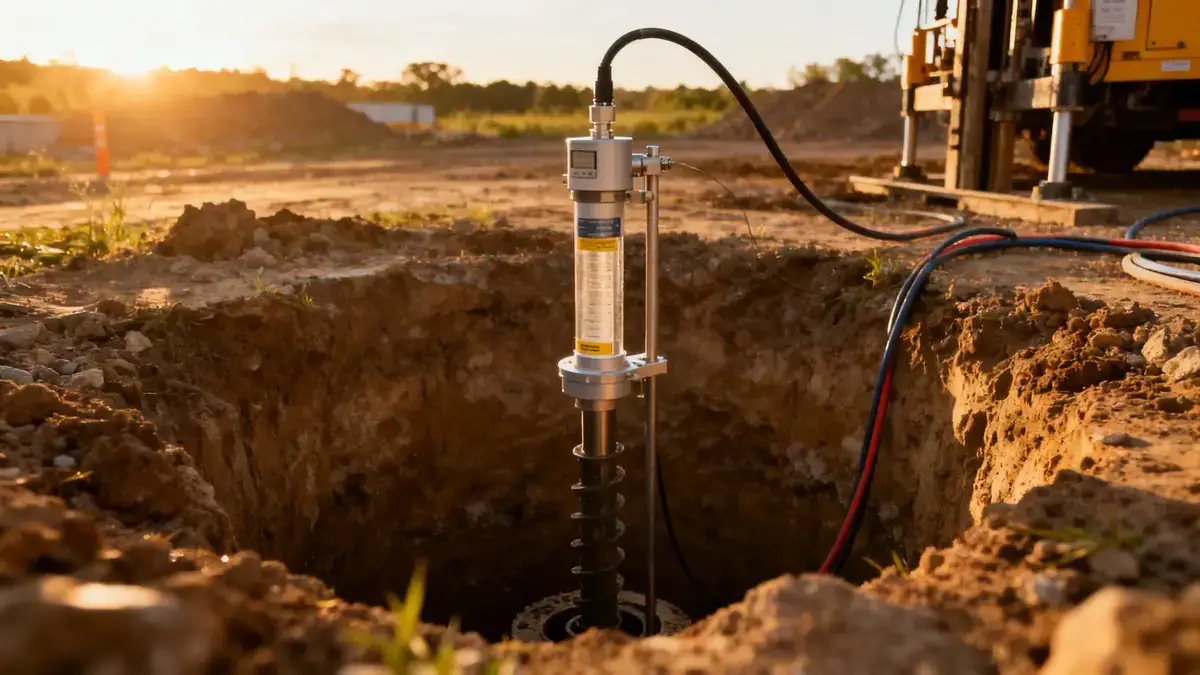
Our methodology in Murfreesboro begins with a thorough review of existing geological maps and seismic hazard data. We then conduct site-specific investigations including spt boring to obtain soil samples and perform in-situ tests. Laboratory testing on recovered samples determines index properties, strength, and consolidation characteristics. All fieldwork follows ASTM D1586 and ASTM D2488, and our analyses incorporate ASCE 7 seismic provisions to account for the moderate to high seismic risk in the region. This systematic approach ensures robust data for foundation design recommendations.
Reference Technical Parameters
| Parameter | Reference Value |
|---|---|
| Predominant soil type | Silty clay and sandy gravel (alluvial deposits) |
| Maximum seismic acceleration (PGA) | 0.2g to 0.3g (ASCE 7 Seismic Design Category C–D) |
| Typical groundwater level | 3–6 meters below ground surface |
| Bedrock depth | Variable; 10–30 meters (limestone/shale) |
| Typical N60 range (SPT) | 4–25 blows/ft (soft clay to medium dense sand) |
Local Considerations — Murfreesboro
Murfreesboro lies within the Nashville Basin, underlain by Ordovician limestone and shale. Alluvial soils along the Stones River and its tributaries present variable bearing capacities and potential for differential settlement. The region experiences moderate seismicity due to the New Madrid Seismic Zone, with peak ground accelerations up to 0.3g per ASCE 7. Groundwater levels fluctuate seasonally, impacting excavation stability and foundation design. Our team addresses these factors with tailored investigations, including soil mechanics laboratory testing for expansive clays and collapsible soils. For projects requiring regional perspective, we reference our geotechnical engineering en Atlanta experience to ensure consistent quality.
Request a Quote
Our team reviews your project and issues an initial report at no cost.
Or write us directly at [email protected]
Services in Murfreesboro
Applicable Standards
- ASTM D1586 (Standard Test Method for Standard Penetration Test)
- ASTM D2488 (Description and Identification of Soils)
- ASCE 7 (Minimum Design Loads and Associated Criteria for Buildings)
- International Building Code (IBC) – Seismic Provisions
Frequently Asked Questions
What are the typical soil types encountered in Murfreesboro?
Soils in Murfreesboro are predominantly alluvial silty clays and sandy gravels overlying limestone bedrock. Expansive clays are common in some areas, requiring careful evaluation for foundation design.
How does seismic activity affect geotechnical engineering in Murfreesboro?
Murfreesboro is in a moderate seismic zone influenced by the New Madrid Seismic Zone. Geotechnical investigations must account for peak ground accelerations up to 0.3g, and foundation designs should follow ASCE 7 seismic provisions to mitigate liquefaction and settlement risks.
Are geotechnical studies mandatory for construction in Murfreesboro?
While not always mandated by local code, most permitting authorities require a geotechnical report for commercial and multi-family projects. For residential construction, it is highly recommended to identify soil conditions and avoid future structural issues.