Methodology
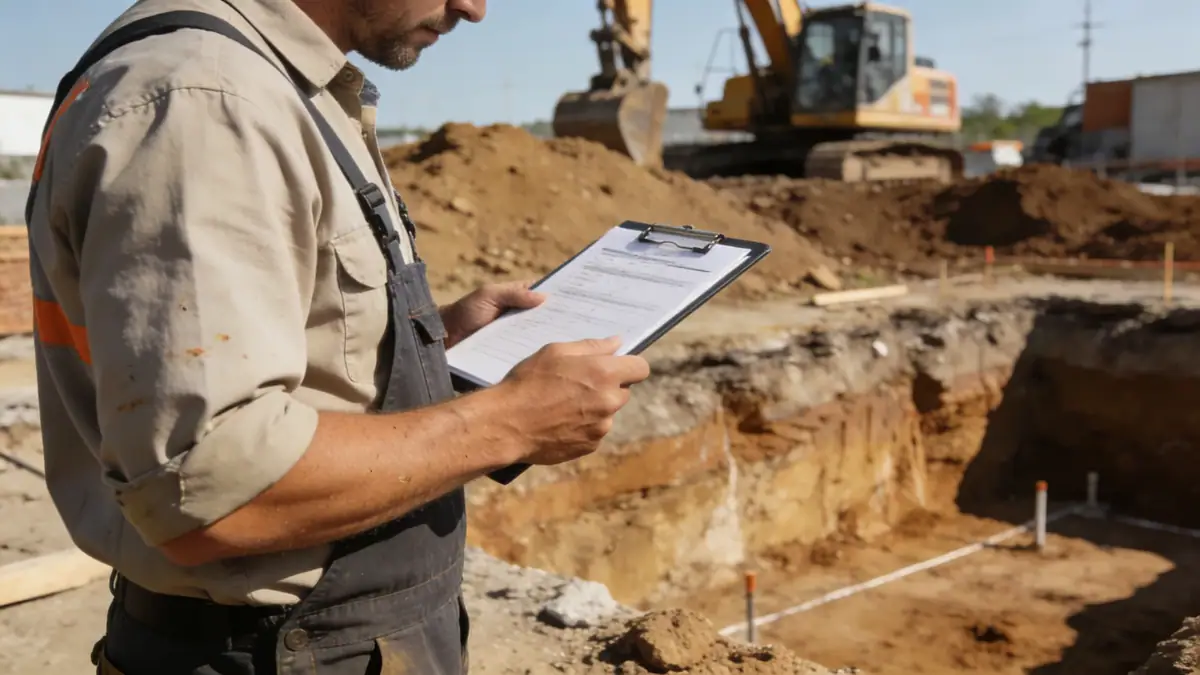
Our methodology for geotechnical engineering in Greensboro begins with a comprehensive site reconnaissance and review of existing geological maps. We then deploy SPT boring to obtain disturbed soil samples and measure N-values, following ASTM D1586 standards. In the laboratory, we classify soils via sieve and hydrometer analyses (ASTM D6913/D7928) and determine shear strength via direct shear tests (ASTM D3080). This integrated approach supports foundation recommendations for Greensboro's diverse developments, from residential subdivisions to commercial structures.
Reference Technical Parameters
| Parameter | Reference Value |
|---|---|
| Predominant soil type | Residual silty sands and clays (Piedmont saprolite) |
| Maximum seismic acceleration (PGA) | 0.2g (ASCE 7-16 Site Class C) |
| Typical groundwater level | 5-15 m below ground surface |
| Bedrock depth | 3-20 m (weathered gneiss/schist) |
| Typical N60 range | 10-40 blows/0.3 m (SPT) |
Local Considerations — Greensboro
Greensboro's geology is dominated by the Piedmont physiographic province, characterized by residual soils overlying weathered crystalline bedrock. Soil types vary from sandy silts to clayey sands, with depth to bedrock often dictating foundation type. Seismic design per ASCE 7-16 typically uses Site Class C or D, requiring site-specific response spectra for critical structures. Groundwater is generally deep but can be perched in clay layers. Our slope stability analyses address cut slopes for roadways and embankments, common in the city's rolling terrain. For regional context, our geotechnical engineering in Atlanta team handles similar Piedmont challenges.
Request a Quote
Our team reviews your project and issues an initial report at no cost.
Or write us directly at [email protected]
Services in Greensboro
Applicable Standards
- ASTM D1586
- ASCE 7-16
- IBC 2021
- City of Greensboro Unified Development Ordinance
Frequently Asked Questions
What are the typical soil types encountered in Greensboro?
Greensboro's soils are predominantly residual, derived from in-place weathering of underlying gneiss, schist, and granite. Common types include sandy silts, clayey sands, and micaceous silts, often containing quartz fragments. These soils can be variable over short distances, requiring careful sampling.
What seismic design criteria apply to Greensboro?
Greensboro falls under ASCE 7-16 Seismic Design Category B or C, with a mapped PGA of about 0.2g. Site-specific response spectra may be needed for Site Class D soils or for essential facilities. Our analyses incorporate the latest USGS hazard data.
Are geotechnical investigations required for all new construction in Greensboro?
While not mandated for single-family homes on stable sites, the City of Greensboro's Unified Development Ordinance recommends geotechnical reports for subdivisions and commercial projects. Most lenders and design professionals require a subsurface investigation to mitigate risk and ensure code compliance.