Methodology

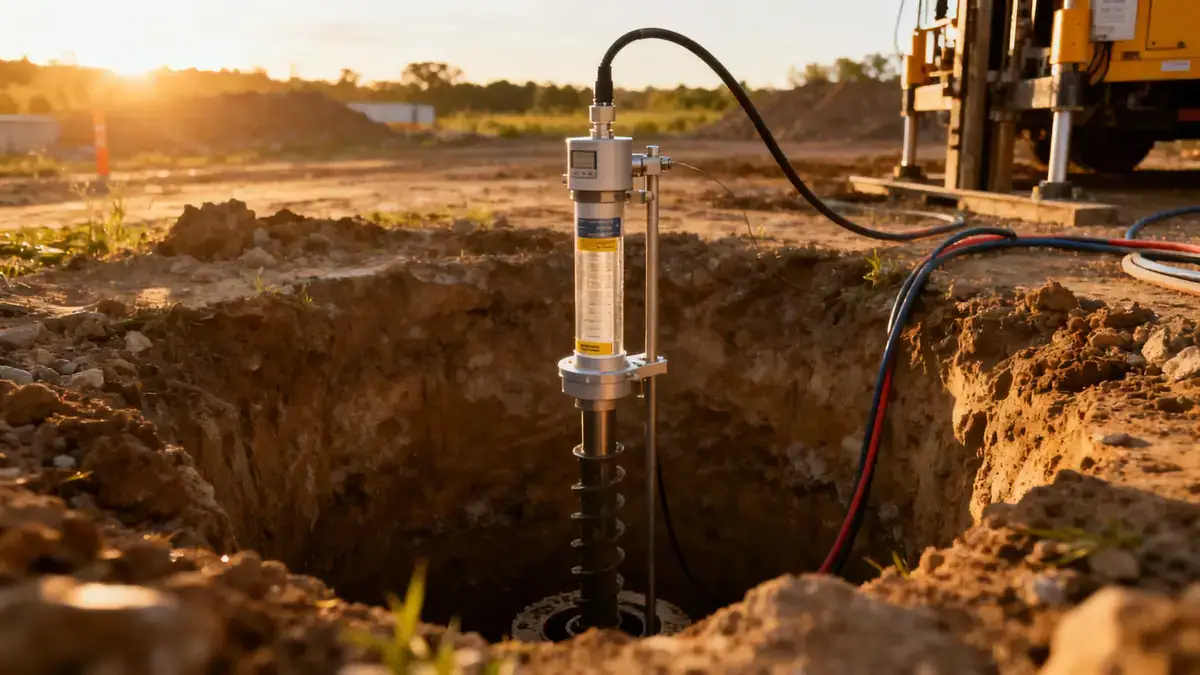
Our approach to geotechnical engineering in Chesapeake integrates field investigations with advanced laboratory testing. We perform standard penetration tests (SPT) per ASTM D1586 to characterize subsurface conditions, typically advancing borings to depths of 8 to 15 meters for residential structures and up to 30 meters for larger facilities. Our spt boring program captures soil samples at 1.5-meter intervals, while our soil mechanics laboratory conducts classification, strength, and consolidation tests to develop design parameters. This systematic framework ensures reliable recommendations for foundation design, slope stability, and earthwork construction across Chesapeake.
Reference Technical Parameters
| Parameter | Reference Value |
|---|---|
| Predominant soil type | Sandy clay and clayey sand (SC, CL) |
| Maximum seismic acceleration (PGA) | 0.15g (ASCE 7-16, Site Class D) |
| Typical groundwater level | 1.5 to 3.0 m below ground surface |
| Bedrock depth | 10 to 25 m (deep coastal plain sediments) |
| Typical N60 range | 8 to 25 blows per 0.3 m |
Local Considerations — Chesapeake
Chesapeake's geology is shaped by the Atlantic Coastal Plain, with thick sequences of unconsolidated sands, silts, and clays overlying bedrock at considerable depth. The region's high water table, often within 1.5 to 3 meters, requires careful dewatering and foundation design. While Chesapeake is in Seismic Design Category B per ASCE 7, local soil amplification can increase ground motion. Our team draws on experience from our soil mechanics laboratory to evaluate soil behavior, including liquefaction potential in loose sands. Typical projects include residential subdivisions in Hickory and commercial sites along Battlefield Boulevard, where we provide geotechnical engineering solutions to mitigate settlement and groundwater issues.
Request a Quote
Our team reviews your project and issues an initial report at no cost.
Or write us directly at [email protected]
Services in Chesapeake
Applicable Standards
- ASTM D1586
- ASCE 7-16
- Virginia Uniform Statewide Building Code (USBC)
- International Building Code (IBC)
Frequently Asked Questions
What soil types are commonly found in Chesapeake?
Chesapeake's soils are predominantly sandy clays and clayey sands, part of the Atlantic Coastal Plain deposits. These soils vary from stiff clays to loose sands, with groundwater levels typically shallow (1.5–3 m depth). Understanding these conditions is critical for foundation design and construction planning.
Does Chesapeake have specific seismic design requirements?
Yes, Chesapeake falls under Seismic Design Category B per ASCE 7, with a maximum considered earthquake spectral response acceleration (S_s) of approximately 0.3g. However, site-specific soil conditions can amplify ground motion, necessitating geotechnical evaluation for critical structures.
Are geotechnical studies mandatory for construction in Chesapeake?
While not always required for single-family homes, most commercial and multi-family projects in Chesapeake mandate a geotechnical investigation per the Virginia USBC. Local building officials often request soil reports to verify foundation suitability and compliance with IBC Chapter 18.