Methodology

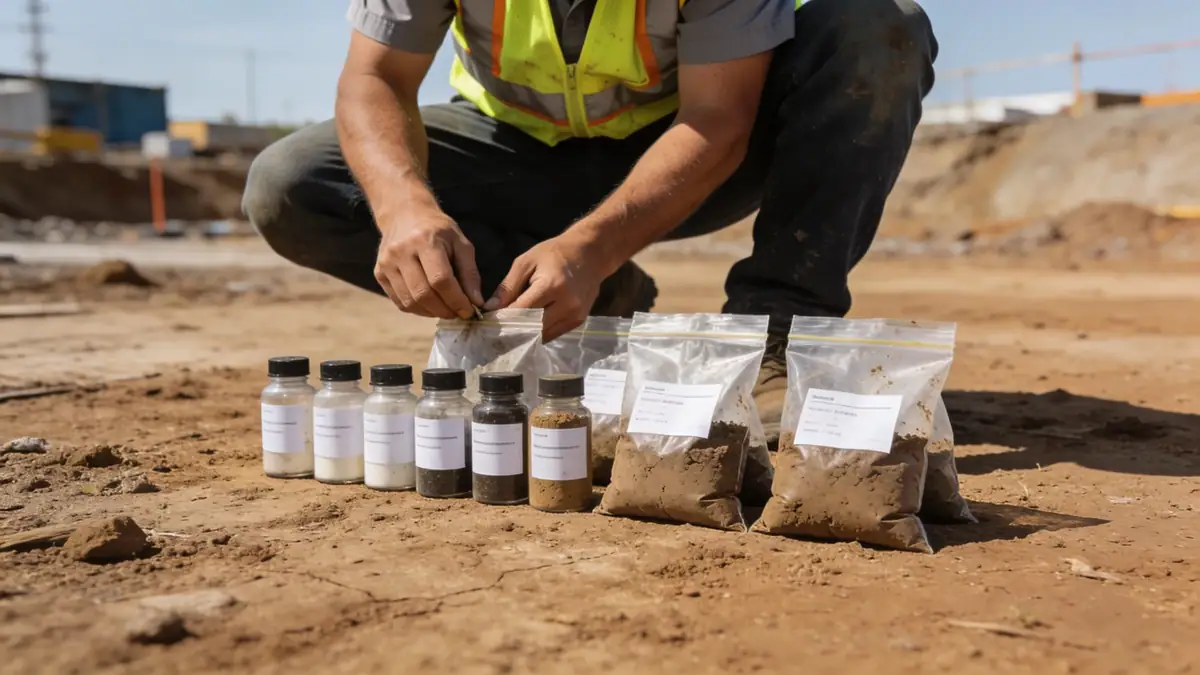
Our methodology in Fort Wayne begins with a thorough review of existing geological data and site history. We conduct field investigations, including spt boring at strategic locations, to characterize subsurface conditions. Laboratory testing on recovered samples provides essential parameters for analysis. Our team integrates these findings with local seismic and groundwater data to develop robust geotechnical models. We adhere to ASTM standards, such as ASTM D1586 for SPT, ensuring data reliability. This systematic approach allows us to provide accurate recommendations for foundation design, slope stability, and earthworks, tailored to Fort Wayne's specific soil and rock conditions.
Reference Technical Parameters
| Parameter | Reference Value |
|---|---|
| Predominant Soil Type | Glacial till with interbedded sand and gravel |
| Maximum Seismic Acceleration (PGA) | 0.10g (ASCE 7-16, Site Class C) |
| Typical Groundwater Level | 2-5 m below ground surface |
| Bedrock Depth | Variable, 30-60 m to limestone/shale |
| Typical N60 Range (SPT) | 10-40 blows/0.3 m in till |
Local Considerations — Fort Wayne
Fort Wayne's geology is dominated by glacial till deposited during the Pleistocene, with interbedded sand and gravel lenses. The water table is generally shallow, requiring dewatering considerations for excavations. Seismic hazard is low to moderate, with a PGA of 0.10g per ASCE 7, but local site effects can amplify ground motion. Downtown and older neighborhoods often have fill soils from historical development, posing variable bearing capacities. Our team has addressed geotechnical challenges in various projects, from residential subdivisions to industrial facilities, ensuring foundations are designed for local soil conditions. For broader regional context, we coordinate with geotechnical engineering in Chicago.
Request a Quote
Our team reviews your project and issues an initial report at no cost.
Or write us directly at [email protected]
Services in Fort Wayne
Applicable Standards
- ASTM D1586 (Standard Penetration Test)
- ASCE 7-16 (Minimum Design Loads for Buildings)
- IBC 2021 (International Building Code)
- ASTM D2487 (Unified Soil Classification System)
Frequently Asked Questions
What soil types are commonly found in Fort Wayne?
Fort Wayne's soils are primarily glacial till, consisting of a mixture of clay, silt, sand, and gravel. Interbedded sand and gravel lenses are common, and fill soils are present in developed areas. These conditions require careful geotechnical evaluation for foundation design.
What seismic design requirements apply in Fort Wayne?
Fort Wayne is in a low-to-moderate seismic zone per ASCE 7-16, with a design PGA of 0.10g. Site-specific seismic analysis may be required for critical structures. Local building codes follow IBC 2021, which mandates geotechnical investigation for seismic site classification.
Is a geotechnical study mandatory for construction in Fort Wayne?
While not always legally mandated for all projects, local building codes and prudent practice strongly recommend geotechnical studies for any significant structure. Lenders and insurers often require them to manage risk. Our team can advise on specific requirements for your project.