
Methodology
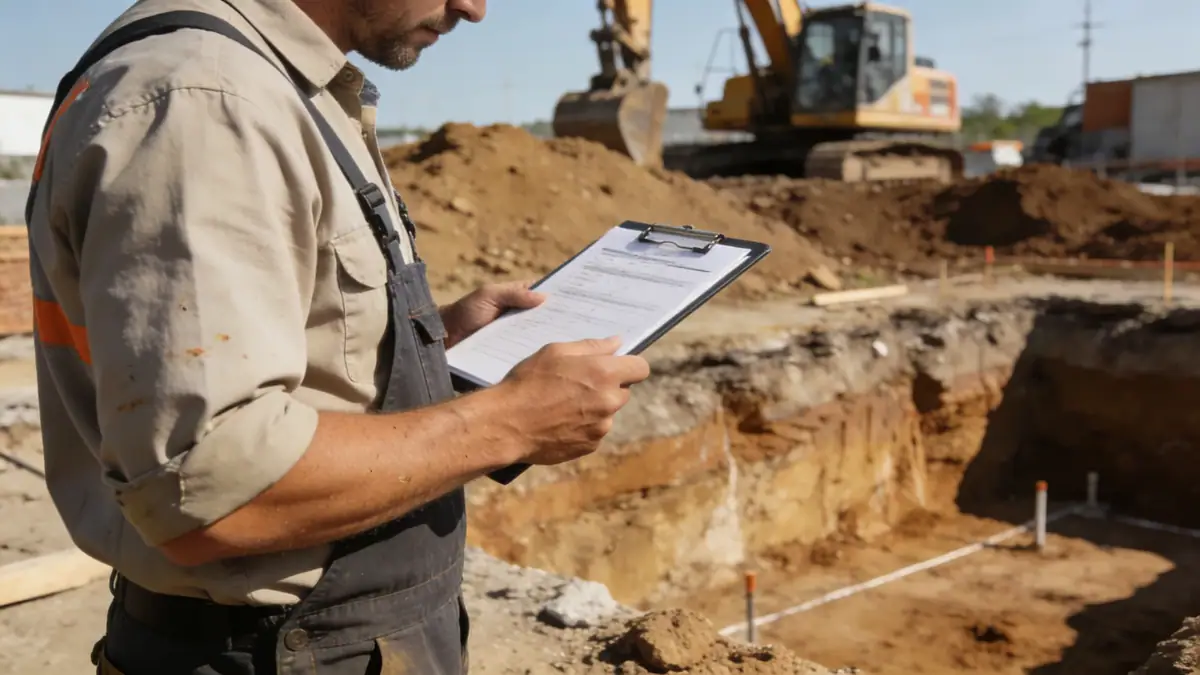
Our approach to geotechnical engineering in Lubbock begins with a thorough subsurface exploration program tailored to the project's scale and complexity. We typically conduct SPT boring to collect soil samples at regular intervals, following ASTM D1586 standards. Samples are then analyzed in our soil mechanics laboratory to determine index properties, strength, and compressibility. For sites with expansive soils, we perform specialized tests such as swell-consolidation and suction measurements. Our methodology integrates local geological data with field and lab results to develop a robust geotechnical model, ensuring that foundations are designed to withstand Lubbock's specific soil and seismic conditions.
Reference Technical Parameters
| Parameter | Reference Value |
|---|---|
| Predominant soil type | Clay and sandy clay (CH, CL, SC) |
| Typical N60 range (SPT) | 4 to 15 blows/ft (0.6 m) in upper 5 m |
| Maximum seismic acceleration (PGA) | 0.10g to 0.15g (ASCE 7-16) |
| Typical groundwater depth | 10 to 30 m below surface |
| Bedrock depth | > 100 m (deep sedimentary basin) |
Local Considerations — Lubbock
Lubbock's geology is dominated by the Southern High Plains, with deep deposits of eolian and alluvial sediments. The soils are often expansive clays (Chlorite and Smectite groups), which can cause significant heave and shrinkage with moisture changes. Groundwater is typically deep, but perched water may occur after heavy rains. Seismic hazard is moderate, with a PGA of 0.10g to 0.15g per ASCE 7-16. Foundation design must account for soil volume changes; drilled piers or stiffened slabs are common. Our team has extensive local experience, and we coordinate with our geotechnical engineering en Denver office for regional expertise. For retaining wall projects, we integrate retaining wall design tailored to Lubbock's conditions.
Request a Quote
Our team reviews your project and issues an initial report at no cost.
Or write us directly at [email protected]
Services in Lubbock
Applicable Standards
- ASTM D1586 (Standard Penetration Test)
- ASCE 7-16 (Minimum Design Loads for Buildings)
- IBC 2021 (International Building Code)
- City of Lubbock Building Code
Frequently Asked Questions
What are the typical soil conditions in Lubbock?
Lubbock soils are predominantly clays and sandy clays, often expansive. The top layers are typically stiff to very stiff, underlain by dense sands. Groundwater is generally deep, but local variations exist.
Is a geotechnical study mandatory for construction in Lubbock?
The City of Lubbock requires geotechnical investigations for most commercial and multi-family projects. Single-family homes may not require a full study, but it is highly recommended due to expansive soils.
Does Lubbock have seismic design requirements?
Yes, Lubbock is in a moderate seismic zone per ASCE 7-16. Site-specific seismic analysis may be required for critical structures. Our team incorporates these factors into foundation design.