Methodology

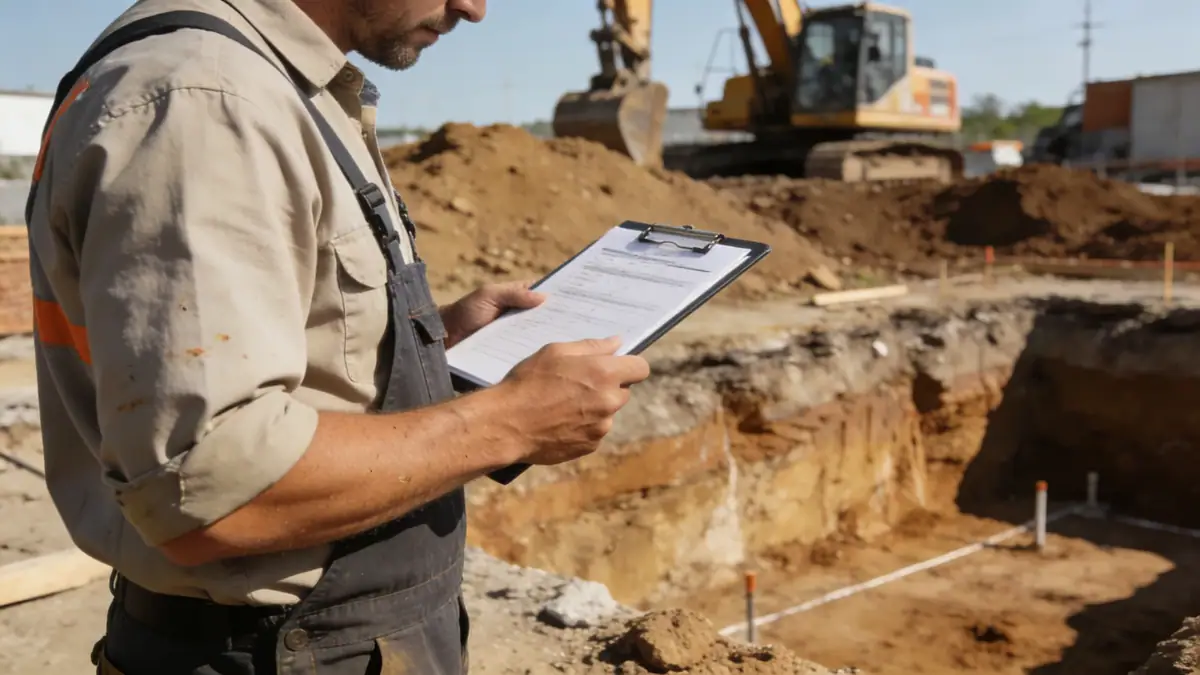
Our approach to geotechnical engineering in Milwaukee begins with a comprehensive site reconnaissance and review of available geological maps and previous studies. We then perform subsurface explorations using methods such as spt boring to obtain soil samples and measure penetration resistance. Laboratory testing on retrieved samples includes index properties, strength, and consolidation parameters, all conducted in our accredited soil mechanics laboratory. The data are interpreted to develop soil profiles and calculate allowable bearing capacities, settlement estimates, and lateral earth pressures, ensuring designs are tailored to the specific site conditions.
Reference Technical Parameters
| Parameter | Reference Value |
|---|---|
| Predominant Soil Type | Glacial till (silty clay, sand, gravel) |
| Maximum Seismic Acceleration (PGA) | 0.15g (ASCE 7-16, Site Class D) |
| Typical Groundwater Level | 3–6 m below grade |
| Bedrock Depth | 10–30 m (Niagara dolomite) |
| Typical N60 Range (SPT) | 10–40 blows/0.3 m |
Local Considerations — Milwaukee
Milwaukee's glacially derived soils exhibit high variability over short distances, necessitating multiple borings per site. The stiff clays can exhibit moderate to high shrink-swell potential, requiring careful moisture control during earthwork. Groundwater levels fluctuate with Lake Michigan and seasonal precipitation, impacting excavation dewatering and basement design. Seismic site classification per ASCE 7 typically falls into Site Class D, requiring site-specific response spectra for critical structures. For projects requiring advanced analysis, our team coordinates with our slope stability specialists to evaluate natural or cut slopes in the Kettle Moraine region. Our main operations are based out of our hub, offering geotechnical engineering en Chicago support for regional projects.
Request a Quote
Our team reviews your project and issues an initial report at no cost.
Or write us directly at [email protected]
Services in Milwaukee
Applicable Standards
- ASTM D1586 (Standard Penetration Test)
- ASCE 7-16 (Minimum Design Loads and Associated Criteria for Buildings and Other Structures)
- IBC 2018 (International Building Code)
- Wisconsin Administrative Code (SPS 361-366)
Frequently Asked Questions
What are the typical soil conditions for foundation design in Milwaukee?
Milwaukee's soils are predominantly glacial till, comprising stiff clays, silts, sands, and gravels. Bearing capacities typically range from 150 to 300 kPa for shallow foundations, depending on the soil density and consistency. Deeper foundations may be required where loose soils or organic deposits are present.
Is a geotechnical investigation required for all construction projects in Milwaukee?
Yes, the Wisconsin Administrative Code and IBC 2018 mandate geotechnical investigations for most structures, especially those with high loads, deep foundations, or in areas with known soil variability. A site-specific study ensures compliance with seismic design criteria and mitigates settlement and stability risks.
How does the seismic hazard in Milwaukee affect foundation design?
Milwaukee lies in a moderate seismic zone with a PGA of 0.15g for Site Class D. This requires consideration of liquefaction potential in loose saturated sands and dynamic lateral earth pressures. Our designs incorporate ASCE 7 provisions to ensure structural safety during seismic events.