
Methodology
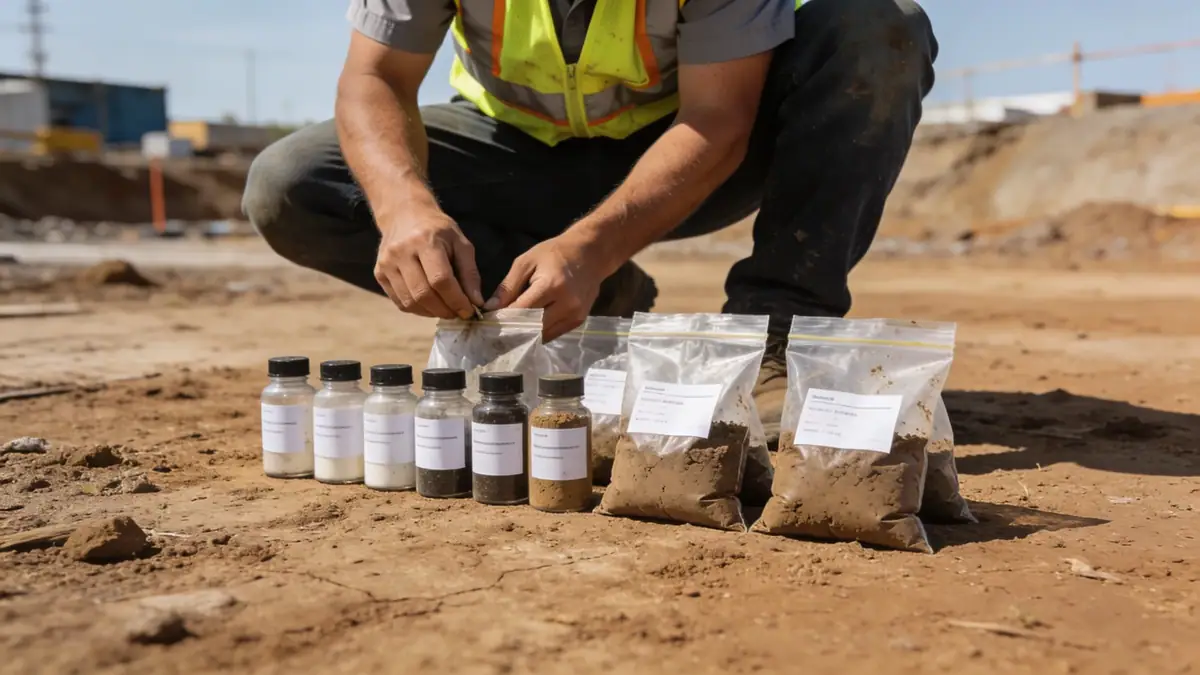
Our approach to geotechnical engineering in Raleigh integrates standard field and laboratory methods to characterize subsurface conditions comprehensively. We conduct standard penetration testing (SPT) per ASTM D1586 at regular intervals to assess soil density and strength, typically advancing borings to depths of 8 to 15 meters for low-rise structures. Our soil mechanics laboratory performs index tests including Atterberg limits and grain size analysis to classify soils, while direct shear and consolidation tests evaluate shear strength and compressibility. For slope stability and retaining wall projects, we combine field data with limit equilibrium analysis, referencing ASCE 7 for seismic loading. This systematic methodology ensures reliable parameters for foundation and earthwork design in Raleigh's Piedmont geology.
Reference Technical Parameters
| Parameter | Reference Value |
|---|---|
| Predominant Soil Type | Clayey sand (SC) to sandy clay (CL), residual from granite and gneiss |
| Maximum Seismic Acceleration (PGA) | 0.10–0.15 g (ASCE 7-16, Site Class C/D) |
| Typical Groundwater Level | 3–8 m below grade, variable with topography |
| Bedrock Depth | 5–20 m, shallow in western Raleigh (Piedmont bedrock) |
| Typical N60 Range | 10–30 blows/ft in residual soils; 40–60 in weathered rock |
Local Considerations — Raleigh
Raleigh's geology is dominated by saprolitic soils derived from weathered crystalline bedrock, which exhibit significant variability in strength and compressibility over short distances. The shallow groundwater table, especially near streams and in the Neuse River basin, necessitates careful dewatering and foundation drainage design. Seismic hazard is moderate, with peak ground accelerations of 0.10–0.15 g per ASCE 7, requiring site-specific response analysis for critical structures. Our experience spans from downtown high-rises to suburban developments, where we address challenges like expansive clay behavior and the need for deep foundations on weathered rock. For clients requiring broader regional support, our geotechnical engineering en Philadelphia team provides complementary expertise.
Request a Quote
Our team reviews your project and issues an initial report at no cost.
Or write us directly at [email protected]
Services in Raleigh
Applicable Standards
- ASTM D1586 (Standard Penetration Test)
- ASCE 7-16 (Minimum Design Loads and Associated Criteria for Buildings and Other Structures)
- North Carolina Building Code (NCBC, based on IBC)
- Eurocode 7 (for international projects)
Frequently Asked Questions
What types of soil are commonly found in Raleigh?
Raleigh's Piedmont region features residual soils derived from granite and gneiss, predominantly clayey sands (SC) and sandy clays (CL). These soils often contain significant fines and can be expansive, requiring careful evaluation for foundation design.
Does Raleigh have specific seismic design requirements?
Yes, the North Carolina Building Code adopts ASCE 7 seismic provisions. Raleigh falls in Seismic Design Category B or C, with peak ground accelerations of 0.10–0.15 g. Site-specific response analysis may be required for Risk Category III or IV structures.
Are geotechnical studies mandatory for construction in Raleigh?
While not always legally required for all projects, most local building officials recommend or require a geotechnical report for new construction, particularly for large buildings, slopes, and areas with known soil issues. Lenders and insurers often mandate them for risk management.