Methodology
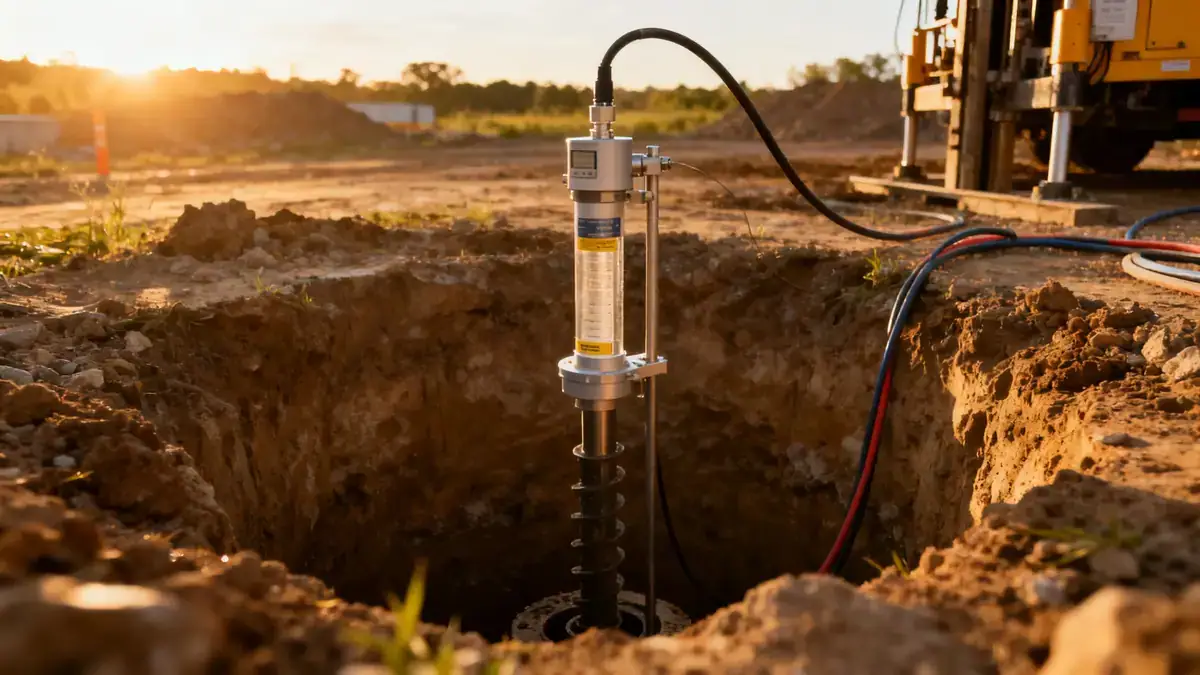
Our approach to geotechnical engineering in Sioux City begins with a thorough review of existing geologic maps and previous site data. We then conduct subsurface investigations using methods such as spt boring to obtain soil samples and measure resistance, and install piezometers for groundwater monitoring. Laboratory testing on retrieved samples includes grain size analysis, Atterberg limits, and triaxial compression tests to characterize soil behavior. For seismic evaluations, we perform shear wave velocity profiling to determine site class per ASCE 7. All data is synthesized into a geotechnical report that outlines foundation recommendations, settlement estimates, and construction considerations tailored to the project's needs.
Reference Technical Parameters
| Parameter | Reference Value |
|---|---|
| Predominant soil type | Silty sand and lean clay (alluvial) |
| Maximum seismic acceleration (PGA) | 0.15–0.25 g (Site Class D) |
| Typical groundwater level | 3–6 m below ground surface |
| Bedrock depth | 30–60 m (shale/limestone) |
| Typical N60 range | 5–15 blows/ft (sands), 10–25 blows/ft (glacial till) |
Local Considerations — Sioux City
Sioux City's alluvial soils are prone to liquefaction during seismic events, requiring careful evaluation per ASCE 7. The Missouri River floodplain has high groundwater levels that influence excavation stability and foundation design. Downtown areas often have undocumented fill from historical industrial activities, necessitating soil testing for contamination and variable bearing capacity. In contrast, the bluffs to the east feature glacial till with higher bearing capacity but potential for slope instability. Our team has addressed these conditions in projects ranging from levees to high-rise foundations, leveraging soil mechanics laboratory capabilities for site-specific characterization. We also coordinate with local building officials to ensure compliance with the 2021 Iowa State Building Code and ASCE 7-22 seismic provisions.
Request a Quote
Our team reviews your project and issues an initial report at no cost.
Or write us directly at [email protected]
Services in Sioux City
Applicable Standards
- ASTM D1586 (Standard Penetration Test)
- ASCE 7 (Minimum Design Loads for Buildings and Other Structures)
- Iowa State Building Code (2021)
- ASTM D2487 (Classification of Soils for Engineering Purposes)
- ASTM D422 (Particle-Size Analysis of Soils)
Frequently Asked Questions
What are the typical soil conditions in Sioux City?
Sioux City is predominantly underlain by alluvial silty sands and clays from the Missouri River floodplain, with glacial till on the bluffs. Groundwater is typically shallow, between 3 and 6 meters deep. These conditions require careful foundation design to manage settlement and liquefaction risk.
What seismic design code applies in Sioux City?
Sioux City falls under the 2021 Iowa State Building Code, which adopts ASCE 7-22 for seismic loads. The region has a moderate seismic hazard, with mapped PGA values around 0.15–0.25 g. Site-specific soil response analysis may be required for critical facilities.
Are geotechnical studies mandatory for new construction in Sioux City?
While not always explicitly required for all projects, most jurisdictions in Woodbury County recommend or require a geotechnical report for commercial and multi-family buildings. It is essential for foundation design, especially in areas with high groundwater or fill soils. Our team can advise on local requirements.