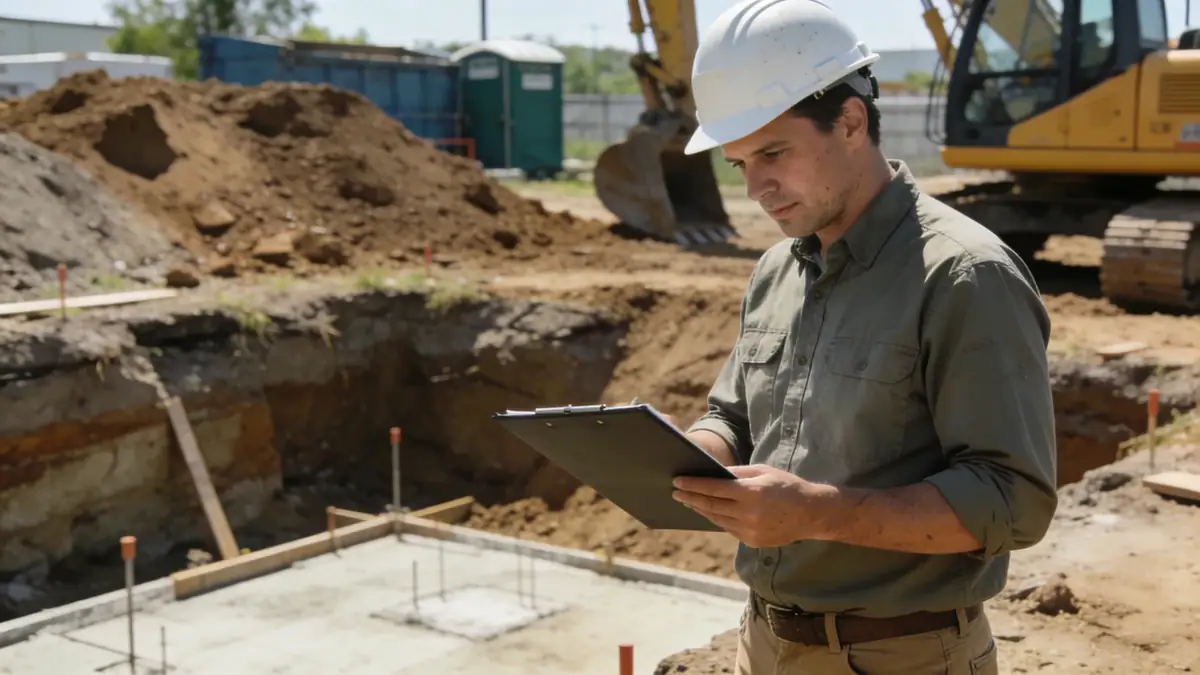
Methodology
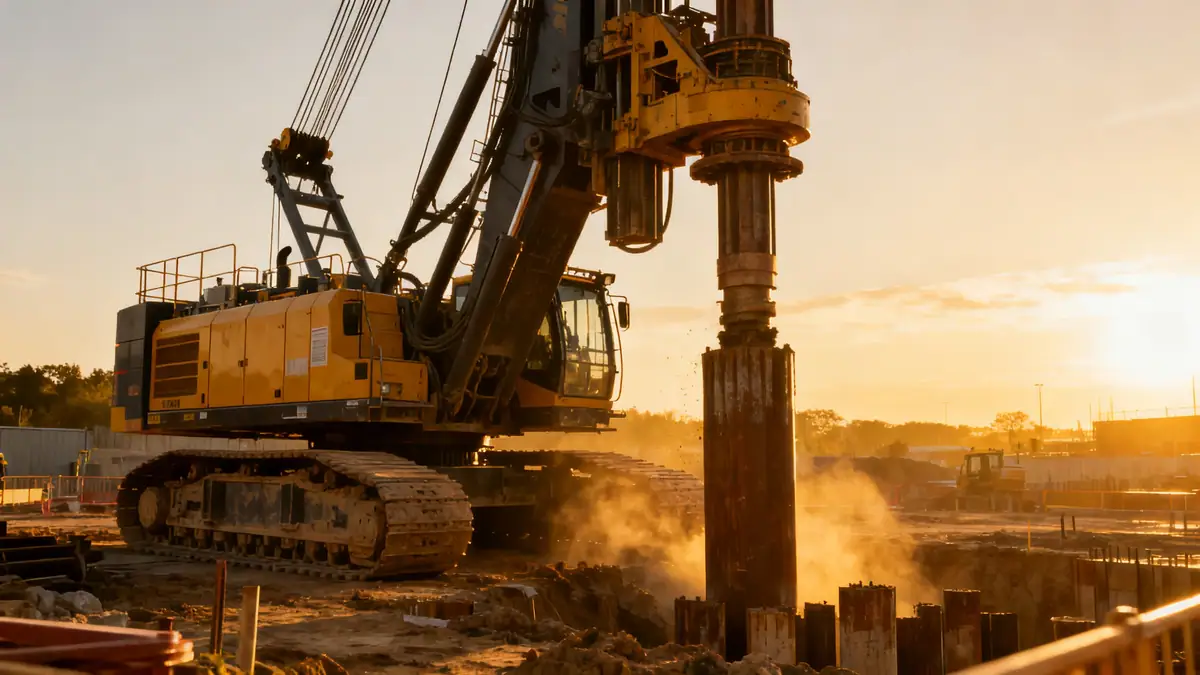
Our methodology for geotechnical engineering in Springfield Illinois begins with a comprehensive review of existing geologic maps and nearby project records. We then conduct field exploration using methods such as SPT boring to recover disturbed and undisturbed samples, perform standard penetration tests (SPT) per ASTM D1586, and install piezometers for groundwater monitoring. In the laboratory, we classify soils (ASTM D2487), determine moisture-density relationships (ASTM D698), and measure shear strength via direct shear (ASTM D3080) or triaxial compression. Our team integrates these data into a coherent geotechnical model that considers bearing capacity, settlement, slope stability, and seismic site class per ASCE 7. This systematic process ensures site-specific recommendations tailored to Springfield's conditions.
Reference Technical Parameters
| Parameter | Reference Value |
|---|---|
| Predominant soil type | Glacial till (silty clay with sand and gravel) |
| Maximum seismic acceleration (PGA) | 0.15–0.20 g (IBC 2021) |
| Typical groundwater level | 3–10 m below ground surface |
| Bedrock depth | 10–30 m (Pennsylvanian shale and limestone) |
| Typical N60 range | 8–25 blows/0.3 m (glacial till) |
Local Considerations — Springfield Illinois
Springfield Illinois sits within the Springfield Plain, characterized by thick glacial deposits (Wisconsinan till) overlying Pennsylvanian bedrock. The region exhibits moderate seismic hazard from the New Madrid Seismic Zone, requiring site-specific seismic site classification per ASCE 7. Groundwater is generally deep, but local variations occur near the Sangamon River. Our team has extensive experience with expansive clay behavior in fill areas and variable till properties across different quadrants of the city. We recommend phased investigations for large developments to capture spatial variability. For a broader regional perspective, see our geotechnical engineering en Chicago hub, which addresses similar glacial geology and seismic considerations. Additionally, our soil mechanics laboratory provides tailored testing for Springfield soils.
Request a Quote
Our team reviews your project and issues an initial report at no cost.
Or write us directly at [email protected]
Services in Springfield Illinois
Applicable Standards
- ASTM D1586 (Standard Penetration Test)
- ASCE 7 (Minimum Design Loads for Buildings)
- IBC 2021 (International Building Code)
- ASTM D2487 (Classification of Soils)
- ASTM D698 (Standard Proctor)
Frequently Asked Questions
What soil conditions are typical for geotechnical engineering in Springfield Illinois?
Springfield's subsurface is dominated by glacial till—a dense mixture of silty clay, sand, and gravel. This material provides moderate bearing capacity (typically 100–200 kPa) but can be variable. Local alluvial deposits near the Sangamon River may include loose sands and silts, requiring careful evaluation for settlement and liquefaction potential.
Is seismic design required for projects in Springfield Illinois?
Yes, due to proximity to the New Madrid Seismic Zone, the IBC requires site-specific seismic hazard analysis. Springfield falls in Seismic Design Category B or C, with peak ground accelerations of 0.15–0.20 g. A geotechnical investigation must determine Site Class (A–F) per ASCE 7 to establish design spectra for structures.
Are geotechnical studies mandatory for construction in Springfield Illinois?
While not universally required for all small residential projects, building officials increasingly request geotechnical reports for commercial, industrial, and multi-family structures. The IBC and local amendments often mandate subsurface exploration for buildings with significant loads or unusual site conditions. Early geotechnical consultation can prevent costly redesigns.